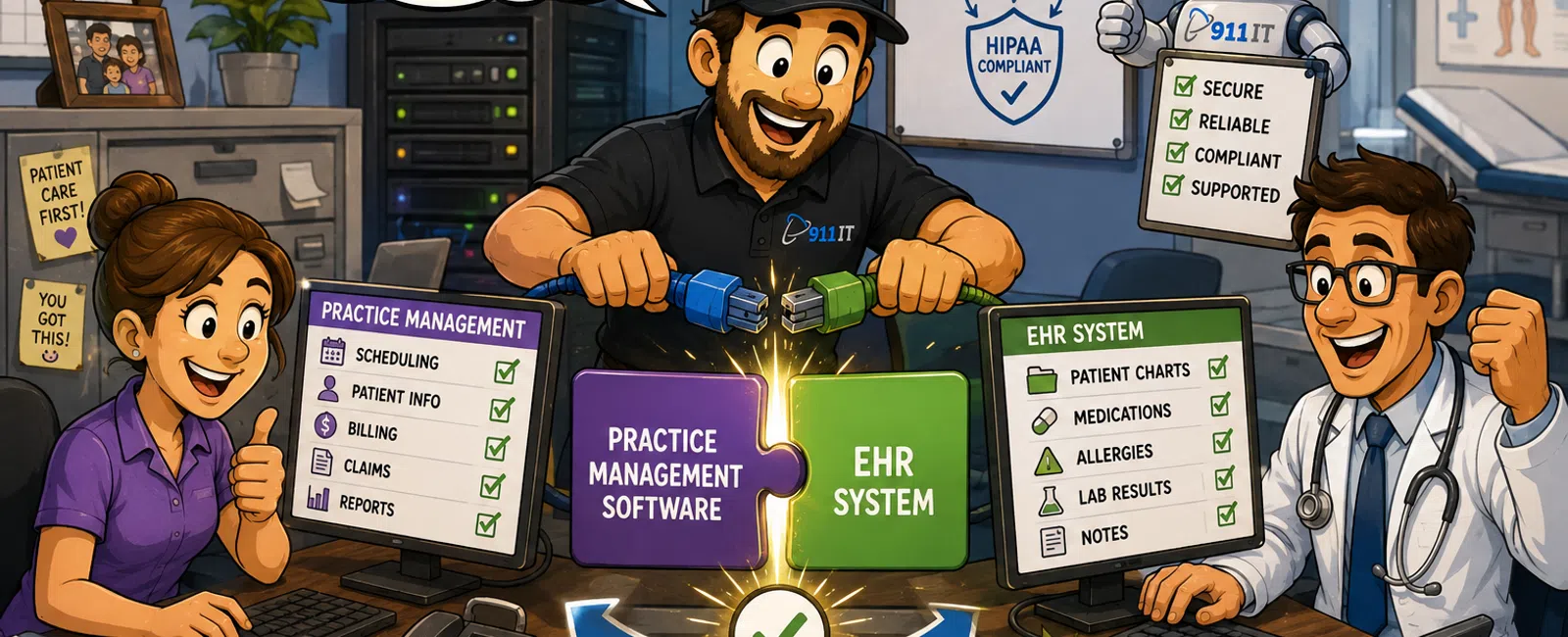
Yes, most practice management software integrates with EHR systems through HL7 interfaces, API connections, or direct vendor partnerships. Integration typically takes 2-8 weeks depending on system complexity and data mapping requirements. Successful integration requires technical expertise, HIPAA-compliant data transfer protocols, and thorough testing to ensure clinical workflows remain uninterrupted while maintaining patient data security.
What Types of Integration Are Available Between Practice Management and EHR Systems?
Three primary integration methods connect practice management software with EHR platforms: bidirectional HL7 interfaces, RESTful API connections, and vendor-native integrations. HL7 interfaces remain the healthcare industry standard for exchanging patient demographics, scheduling data, and billing information between disparate systems.
API-based integrations offer real-time data synchronization and more granular control over which data elements flow between systems. Modern cloud-based platforms increasingly support REST APIs that enable seamless patient portal access, appointment scheduling, and claims processing without manual data entry.
Vendor-native integrations provide the smoothest implementation when your practice management and EHR systems come from the same manufacturer or certified partner ecosystem. These pre-built connections typically require less customization and maintain better support over time as both systems receive updates.
Single sign-on (SSO) capabilities should accompany any integration strategy to prevent staff from managing multiple credentials while maintaining HIPAA-compliant access controls. Each authentication event must be logged for audit trail purposes.
Integration architecture determines which system serves as the master record for specific data types - patient demographics typically originate in practice management while clinical notes remain in the EHR.
How Long Does Practice Management and EHR Integration Take?
Integration timelines vary from two weeks for simple, vendor-supported connections to eight weeks or more for complex, multi-location implementations requiring custom data mapping. The discovery phase alone typically consumes one to two weeks as IT teams document existing workflows, data structures, and integration requirements.
Data mapping represents the most time-intensive phase, requiring clinical and administrative staff to verify that patient identifiers, appointment types, procedure codes, and insurance information translate correctly between systems. Mismatched field definitions or incompatible data formats extend this phase significantly.
Testing cycles must validate bidirectional data flow under various scenarios: new patient registration, appointment scheduling, charge capture, insurance verification, and claims submission. Each workflow requires multiple test iterations to identify edge cases that could disrupt daily operations.
Plan for 30-45 days of parallel system operation before fully transitioning to integrated workflows.
Staff training adds another one to two weeks to the timeline, as front desk personnel, billing specialists, and clinical staff each need role-specific instruction on how integration changes their daily tasks. Rushed training leads to data entry errors that compromise both systems.
Go-live support should include on-site or readily available technical resources for at least the first week of production use to address unexpected issues before they cascade into larger problems.
What HIPAA Compliance Requirements Apply to System Integration?
Every integration between practice management and EHR systems must maintain HIPAA-compliant encryption for ePHI both in transit and at rest. TLS 1.2 or higher encryption protocols are mandatory for any data transmission between systems, whether on-premises or cloud-based.
Business Associate Agreements must be executed with every vendor involved in the integration: the EHR provider, practice management software vendor, integration platform provider, and your healthcare IT support partner. These BAAs define each party's responsibilities for protecting patient data and responding to potential breaches.
Access controls require role-based permissions that restrict which staff members can view, modify, or transmit specific data types through the integrated systems. Audit logs must capture every access event, data modification, and system query involving PHI with sufficient detail to reconstruct user actions during compliance reviews.
Risk assessments should be conducted before integration begins and repeated after go-live to identify vulnerabilities introduced by the new data flows. Utah healthcare providers must also consider Utah Health Data Authority requirements for electronic health information exchange.
Breach notification procedures must account for integrated systems - a security incident affecting one platform may require disclosure based on data accessible through the connected system. Response plans should clearly define which vendor bears responsibility for notification in various breach scenarios.
Regular compliance audits verify that integration maintains HIPAA standards as both systems evolve through updates and patches. HIPAA compliance services help practices maintain documentation and respond to OCR inquiries regarding integrated system security.
Which Data Elements Should Flow Between Practice Management and EHR Systems?
Patient demographics form the foundation of integration: name, date of birth, contact information, insurance details, and unique identifiers must synchronize bidirectionally to prevent duplicate records. Discrepancies in patient matching can lead to clinical errors, denied claims, and compliance violations.
Appointment scheduling data should flow from practice management into the EHR so clinical staff see upcoming visits, prepare charts, and document encounters without switching systems. Completed visit documentation should trigger billing workflows in the practice management system automatically.
Insurance verification results, eligibility checks, and authorization status belong in both systems - clinical staff need this information to discuss treatment options while billing staff require it for accurate claims submission. Real-time eligibility verification prevents surprise denials weeks after service delivery.
Charge capture and procedure codes should flow from clinical documentation in the EHR to billing functions in practice management software. Automated charge capture reduces missed revenue and ensures that billed services match documented clinical activities.
Payment posting, adjustment codes, and patient balance information must update the EHR so clinical staff can address outstanding balances during patient interactions. Integrated financial data improves collection rates and patient satisfaction by enabling point-of-service discussions.
Lab results, imaging reports, and specialist notes often require integration with external systems beyond just practice management and EHR platforms, creating a more complex interface ecosystem that demands careful coordination.
What Common Integration Challenges Should Practices Anticipate?
Data synchronization conflicts occur when staff modify the same patient record in both systems simultaneously, creating discrepancies that require manual resolution. Clear policies defining which system serves as the authoritative source for each data type prevent most conflicts.
Performance degradation can affect both systems when integration processes consume excessive server resources or network bandwidth. Properly configured interfaces use scheduled batch processing for non-urgent data while maintaining real-time connections for critical workflows like appointment scheduling.
Vendor finger-pointing complicates troubleshooting when issues arise - the EHR vendor blames the practice management system while the PM vendor points to the integration platform. Experienced managed IT services providers serve as neutral parties who diagnose root causes and coordinate vendor responses.
Software updates from either vendor can break integration functionality without warning. Change management procedures should include testing integration points after every system update before deploying to production environments.
Staff resistance emerges when integrated workflows differ from established routines, particularly if integration adds steps or changes screen navigation patterns. Early staff involvement in workflow design and comprehensive training reduce adoption friction.
Backup and disaster recovery planning becomes more complex with integrated systems - restoration procedures must account for data dependencies between platforms to prevent orphaned records or broken references. Testing recovery procedures validates that integrated systems can be restored to a consistent state.
How Do You Maintain Integration Performance Over Time?
Continuous monitoring tracks integration transaction volumes, error rates, and processing times to identify degradation before it affects clinical operations. Alert thresholds should trigger IT investigation when transaction failures exceed normal baselines or processing delays extend beyond acceptable limits.
Regular interface audits compare record counts, data checksums, and key field values between systems to detect synchronization drift. Automated reconciliation scripts can flag discrepancies for manual review before they compound into larger data integrity issues.
Version compatibility testing should occur in staging environments before applying updates to either system in production. Regression testing verifies that existing integration functionality continues working after patches, upgrades, or configuration changes.
Performance optimization may require adjusting batch processing schedules, increasing server resources, or refining database queries as transaction volumes grow with practice expansion. Proactive capacity planning prevents integration bottlenecks during peak usage periods.
Documentation maintenance ensures that technical specifications, data mapping tables, and troubleshooting procedures remain current as systems evolve. Outdated documentation extends resolution time when staff turnover occurs or emergency issues arise.
Vendor relationship management includes regular check-ins with EHR and practice management representatives to stay informed about roadmap changes, upcoming features, and deprecation notices that could affect integration architecture. Strong vendor relationships facilitate faster support responses when critical issues emerge.
Key Maintenance Activities for Sustained Integration Success
- Weekly monitoring reviews: Analyze transaction logs, error reports, and performance metrics to identify emerging issues before they impact operations.
- Monthly data reconciliation: Compare patient records, appointment counts, and billing data between systems to verify synchronization accuracy.
- Quarterly vendor coordination: Schedule calls with EHR and practice management vendors to discuss upcoming releases, known issues, and optimization opportunities.
- Annual integration audits: Conduct comprehensive reviews of security controls, data flows, and business process alignment to ensure integration continues meeting practice needs.
- Continuous staff feedback: Maintain open channels for clinical and administrative staff to report integration issues or suggest workflow improvements.
Frequently Asked Questions
Can we integrate practice management software with multiple EHR systems?
Yes, practices operating multiple locations or specialty divisions can integrate one practice management system with several EHR platforms through separate interface connections. Each integration requires independent configuration, testing, and maintenance. This approach works well for multi-specialty groups or practices that have acquired other locations using different EHR systems. Complexity increases with each additional integration point, requiring more robust IT support infrastructure.
What happens to our integration if we switch EHR vendors?
Switching EHR vendors requires rebuilding integration from scratch since interface specifications, data structures, and API endpoints differ between platforms. Plan for 6-12 weeks to design, build, test, and deploy new integration alongside your EHR migration timeline. Historical data mapping becomes critical to ensure continuity of patient records. Your practice management vendor may offer migration assistance tools, but custom integration work is typically necessary regardless of vendor support.
Do cloud-based systems integrate more easily than on-premises software?
Cloud-based systems generally offer more standardized API connections and faster deployment compared to on-premises software requiring VPN tunnels or direct network connections. However, cloud integrations still demand proper authentication, security configuration, and data mapping. Internet connectivity becomes a single point of failure for cloud integrations, making redundant connections advisable. On-premises integrations may offer better performance for high-transaction-volume practices with robust internal networks.
How much does practice management and EHR integration cost?
Integration costs range from $3,000 to $25,000 depending on complexity, customization requirements, and vendor fees. Simple vendor-supported integrations cost less while custom HL7 interfaces requiring extensive data mapping command higher fees. Ongoing maintenance typically adds 15-20% of initial implementation cost annually. Many vendors charge per-interface licensing fees in addition to implementation services. Salt Lake City IT support providers can provide detailed cost estimates based on your specific systems and requirements.
Will integration slow down our practice management or EHR system?
Properly configured integration should not noticeably impact system performance for end users. Background synchronization processes typically run during off-peak hours or use incremental updates that process small data batches continuously. Performance issues usually indicate insufficient server resources, inefficient database queries, or network bandwidth constraints that require optimization. Real-time integration for appointment scheduling and patient lookup may add milliseconds of latency, imperceptible to users under normal conditions.