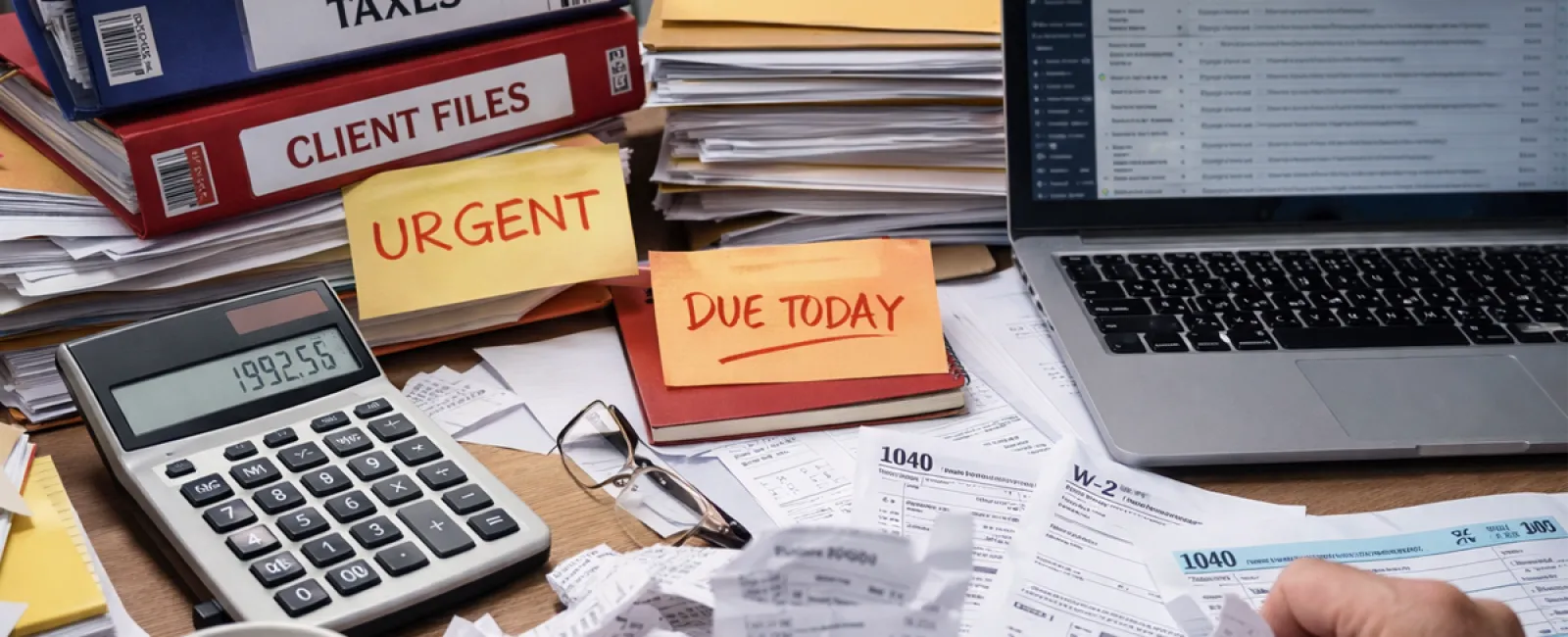
It's March—the peak of tax season chaos.
Your accountant is overwhelmed, your bookkeeper is racing against time, and critical deadlines are closing in. The flood of emails is relentless, and everyone is struggling to keep pace.
While this pressure is nothing new for your team,
it's also prime hunting ground for cybercriminals.
Security experts report a marked surge in phishing attacks during tax season, with phishing emails related to taxes increasing by about 28% in March compared to other months. These scam emails are crafted to blend seamlessly with typical business communications just when your focus is most divided.
This surge isn't accidental.
It's perfectly timed.
Here's what you should expect—and four straightforward strategies to protect your business from becoming an easy mark.
Disrupted Supply Chains Under Pressure
What often goes unnoticed:
Hackers don't only aim at accounting firms—they target the turmoil surrounding them.
When tax season peaks:
- Clients hurriedly send sensitive documents
- Employees skip standard verification steps to keep up
- Requests like "Just send me the file" replace normal caution
- Verification processes are overlooked due to overwhelming workloads
The entire workflow accelerates.
And rushing leads to errors.
Cybercriminals focus on high-pressure environments,
not steady, careful businesses.
March is undoubtedly hectic.
Spotting These Attacks
This is no Hollywood fiction.
It's an email indistinguishable from your usual correspondence.
- An email pretending to be from "your accountant" asking to resend W-2 forms due to missing information
- A vendor message updating bank details that requires immediate action
- A DocuSign request urging you to sign tax documents "today"
- An urgent plea from "your CEO" on the road, requesting swift assistance
These emails appear routine and harmless.
That's exactly why they succeed.
Why Even the Most Careful Can Slip Up
It's not about negligence—it's about human nature.
With overflowing inboxes and looming deadlines, attention lapses. People skim, make assumptions, and react quickly.
Scammers exploit this hurried mindset.
Their tactics depend on you acting too fast to notice subtle inconsistencies. They don't need you to be careless—just busy.
And in March, everyone is busy.
Four Essential Steps to Strengthen Security
The great news: you don't require complex tools or specialized teams to improve your defenses.
Developing a few mindful routines during peak months can make a difference.
1. Confirm payment changes by trusted phone contact
If an email claims a vendor's bank info has changed, avoid replying. Instead, call a known contact number to verify the update.
This simple habit dodges some of the costliest scams.
2. Take time on urgent sensitive information requests
Urgency is a cue to pause, not rush.
If asked to send W-2s, tax records, or financial details immediately, double-check first.
Legitimate senders will accept a brief delay; scammers won't.
3. Validate urgent requests using a separate method
For any "urgent" emails, confirm authenticity via phone, text, or internal chat.
A quick double-check can avert critical mistakes.
True emergencies withstand a two-minute verification; fakes do not.
4. Alert your team to proceed cautiously
Remind employees that tax season invites scams.
Encourage them to slow down, verify, and speak up when something seems suspicious.
This minor cultural shift can save substantial recovery time.
Key Takeaway
Tax season is busy and stressful enough—don't let scams add to that burden.
These attacks lack sophistication but rely heavily on perfect timing.
They exploit rushed decisions, unchecked assumptions, and the relentless March grind.
You don't need to overhaul your entire security setup.
You just need to slow down when urgency strikes and verify when things feel rushed.
In most cases, that simple approach is enough.
Busy Season Security Check
Your business might already practice strong habits—and if so, that's excellent.
But if tax season forces your team into emergency mode, or if you're unsure how urgent requests are handled under pressure, consider a quick security assessment with a free 10-Minute Discovery Call.
No gimmicks. No sales pressure. Just an honest evaluation to see if small changes can prevent major headaches.
If this message doesn't apply to you, please share it with someone who might benefit.
Click here or give us a call at 801-610-6000 to schedule your free 10-Minute Discovery Call.