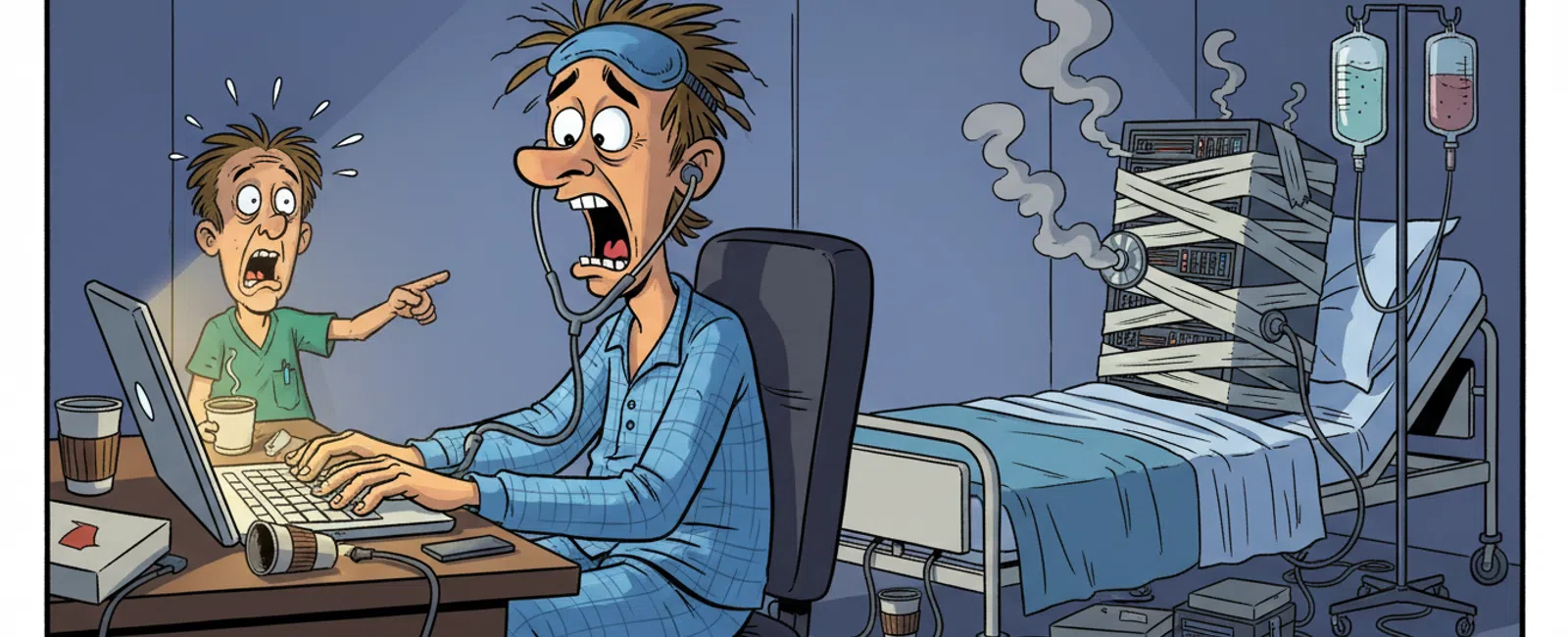
Yes, 911 IT provides 24/7 live helpdesk support for healthcare and dental practices across Salt Lake City, Utah, Wyoming, and Arizona. When your EHR system crashes during evening appointments, patient portals fail on weekends, or ransomware strikes at 2 a.m., our team responds immediately to restore critical systems and protect patient data, ensuring HIPAA-compliant operations never stop.
What happens when your EHR goes down at 7 p.m. with patients still in the building?
Evening and weekend appointments are standard in healthcare. A dental practice scheduling emergency extractions until 8 p.m. or a primary care clinic offering Saturday walk-ins cannot afford EHR downtime when staff need access to patient histories, medication lists, and billing systems.
Traditional 9-to-5 IT support leaves practices stranded during extended hours. Your front desk cannot check patients in. Providers cannot document visits. Billing stops completely. Each minute of downtime translates to frustrated patients, compliance risks, and lost revenue.
Our 24/7 live support means a real technician answers your call - not a voicemail system or offshore call center. Mark from an insurance firm noted our responsiveness: "Phone calls are answered and with their online support capabilities, most issues are resolved within minutes." For healthcare practices managing PHI, this immediate response prevents HIPAA breach scenarios and maintains clinical workflows.
We support major EHR platforms including Epic, Cerner, Athenahealth, and specialty practice management systems common in Utah's healthcare market. Whether your issue involves database connectivity, workstation crashes, or network failures affecting multiple exam rooms, our technicians troubleshoot remotely or dispatch onsite support to South Jordan, Salt Lake City, Provo, and surrounding areas.
911 IT's 24/7 helpdesk ensures healthcare providers never face after-hours IT emergencies alone.
How quickly can you respond to a ransomware attack targeting patient records?
Ransomware attacks on healthcare practices increasingly occur outside business hours when defenses appear weakest. Cybercriminals know medical practices will pay premiums to restore access to patient schedules, treatment plans, and billing data before Monday morning.
Our 24/7 IT monitoring detects suspicious activity - unusual file encryption patterns, unauthorized access attempts, or malware signatures - and triggers immediate alerts to our security team. We isolate affected systems, prevent lateral spread across your network, and begin recovery protocols using your tested backup infrastructure.
For HIPAA-covered entities, ransomware constitutes a potential breach requiring OCR notification if ePHI is compromised. Our incident response includes forensic analysis to determine what data was accessed, documentation for breach notification requirements, and coordination with your Business Associate Agreement obligations.
Salt Lake City practices benefit from our understanding of Utah Health Data Authority requirements and multi-state compliance needs for practices serving patients across state lines. Arizona and Wyoming locations face similar threats but different state notification timelines, which we navigate during crisis response.
Speed matters. Every hour your practice remains encrypted means cancelled appointments, diverted patients, and reputational damage in competitive healthcare markets. Our rapid response and containment protocols minimize downtime and financial impact.
Rapid ransomware response protects both patient data and practice viability.
Can your support team handle telehealth platform failures during virtual appointments?
Telehealth adoption surged across Utah, Wyoming, and Arizona, particularly for rural patient access and specialty consultations. When your telehealth platform fails mid-appointment - video freezing, audio dropping, or complete system crashes - patients lose confidence and providers lose billable time.
Our technicians troubleshoot telehealth infrastructure including bandwidth issues, firewall configurations blocking video traffic, VPN problems for remote providers, and integration failures between telehealth platforms and your EHR. We understand HIPAA-compliant telehealth requirements: encrypted connections, BAA-covered platforms, and secure patient authentication.
Utah's expanding rural telehealth services and Wyoming's geographic challenges make reliable virtual care infrastructure essential. A dermatology practice in Salt Lake City serving patients in Casper or Rawlins cannot afford connectivity failures that force rescheduling and travel burdens on patients.
After-hours telehealth support also covers urgent care virtual visits, behavioral health crisis appointments, and on-call provider access to patient portals from home. Our team ensures providers can securely access ePHI remotely without compromising compliance or creating security vulnerabilities.
We monitor network performance, test failover systems, and maintain redundant internet connections so telehealth appointments proceed smoothly regardless of time or location. Jason from a retail business praised our availability: "The best thing about using 911 IT is the convenience of being able to send a message and have online or onsite support almost immediately."
Telehealth reliability directly impacts patient satisfaction and practice revenue.
What after-hours IT issues do healthcare practices face most frequently?
Common after-hours emergencies include workstation crashes preventing evening documentation, network outages affecting multiple exam rooms, printer failures blocking patient intake forms, and password lockouts when providers work remotely on call.
Dental practices frequently encounter imaging system failures - digital X-ray sensors not connecting, PACS systems timing out, or intraoral camera software crashing during procedures. These issues halt clinical workflows and require immediate resolution to avoid appointment delays.
Medication e-prescribing failures represent another critical after-hours problem. When integration between your EHR and pharmacy networks breaks, providers cannot send prescriptions electronically, forcing manual workarounds that introduce errors and HIPAA risks through unsecured fax or phone transmission.
- EHR system crashes preventing access to patient records during evening appointments
- Network connectivity failures affecting multiple exam rooms or entire practice locations
- Medical imaging system problems blocking diagnostic procedures and treatment planning
- E-prescribing integration failures requiring manual prescription workarounds
- Security alerts demanding immediate investigation to prevent data breaches
- Practice management software issues disrupting scheduling and billing operations
We also handle security alerts requiring immediate investigation - suspicious login attempts, potential phishing emails opened by staff, or unusual data access patterns flagged by monitoring tools. These situations demand rapid assessment to prevent breaches and maintain compliance.
For multi-location practices common in Utah's healthcare market, network connectivity between offices sometimes fails after hours, disrupting centralized scheduling, shared patient records, and consolidated billing. Our team restores connectivity and verifies data synchronization across all locations.
Proactive monitoring prevents many emergencies before they impact patient care.
How does 24/7 support integrate with HIPAA compliance requirements?
HIPAA mandates reasonable safeguards to protect ePHI, including availability controls ensuring authorized access when needed for patient care. After-hours IT failures that prevent providers from accessing patient records during emergencies could constitute compliance violations if reasonable backup systems weren't implemented.
Our HIPAA compliance services include 24/7 monitoring of access logs, encryption status, and backup integrity. We document all after-hours support incidents involving PHI access, creating the audit trails OCR expects during compliance reviews.
When technicians remotely access your systems for emergency support, we follow strict protocols: multi-factor authentication, session recording, minimum necessary access principles, and immediate documentation. Our Business Associate Agreement covers these after-hours support activities, transferring liability appropriately.
Utah healthcare providers serving patients across state lines must also consider Arizona and Wyoming specific privacy requirements. Our team understands these multi-state obligations and ensures after-hours support maintains compliance across all jurisdictions where your practice operates.
Breach notification timelines create additional urgency. HIPAA requires notification within 60 days of discovering a breach, but Utah law mandates notification "without unreasonable delay." After-hours security incidents demand immediate response to meet these overlapping requirements and minimize notification scope.
We coordinate with your compliance officer, privacy officer, and legal counsel during after-hours incidents requiring breach assessment. Our documentation supports your notification decisions and demonstrates reasonable security measures to regulators.
Healthcare practices using our 24/7 support maintain continuous HIPAA compliance even during after-hours emergencies.
Round-the-clock availability is a compliance requirement for responsible healthcare IT management.
What does 24/7 support cost for a typical healthcare practice?
Most Salt Lake City healthcare practices access 24/7 support through our managed IT services, which provide comprehensive coverage including after-hours helpdesk, proactive monitoring, cybersecurity, and compliance support in a single flat-rate package.
Our transparent pricing model eliminates surprise invoices when you call at midnight. You pay a predictable monthly rate regardless of how many after-hours incidents occur, making budgeting straightforward and removing hesitation to contact support when problems arise.
For practices requiring specialized compliance support, our healthcare IT support includes HIPAA-specific monitoring, BAA management, risk assessments, and staff training alongside 24/7 technical support. This integrated approach costs less than hiring full-time IT staff with healthcare expertise.
Marcus from an accounting firm appreciated our accessibility: "Every time I've reached out, I've gotten quick answers and real help - no waiting, no runaround. Their team is friendly, knowledgeable, and always ready to jump in, whether it's online or in person."
Practices often discover that 24/7 support costs less than a single ransomware incident, HIPAA fine, or day of lost revenue from extended downtime. The investment protects both operational continuity and regulatory standing.
We serve practices of all sizes across Salt Lake City, from solo providers to multi-specialty groups, with scalable support matching your patient volume and technology complexity.
Predictable pricing and unlimited after-hours support eliminate financial barriers to getting help when you need it most.
Frequently asked questions
Do you answer calls immediately or use a ticket system after hours?
We provide live phone support 24/7 with real technicians answering calls, not automated systems or offshore call centers. You can also submit tickets through our online portal for non-urgent issues, and our team responds based on severity. Critical emergencies affecting patient care receive immediate attention regardless of time, ensuring your practice never faces downtime alone during after-hours operations.
Can you provide onsite support at 2 a.m. if remote troubleshooting fails?
Yes, we dispatch onsite technicians for emergencies that cannot be resolved remotely, including hardware failures, network infrastructure problems, or situations requiring physical access to servers and equipment. Our service areas include Salt Lake City, South Jordan, Provo, and surrounding Utah communities, with response protocols prioritizing healthcare practices where downtime directly impacts patient care and HIPAA compliance obligations during after-hours incidents.
How do you handle after-hours support for multi-location practices?
We monitor all locations simultaneously through centralized systems, detecting issues across your entire practice network regardless of geographic distribution. Our technicians understand multi-site configurations common in Utah healthcare markets and can troubleshoot connectivity between offices, restore centralized EHR access, and coordinate onsite support across Salt Lake City, Phoenix, Casper, and other locations where your practice operates, maintaining consistent service quality everywhere.
What if my current IT provider only offers business-hours support?
We provide co-managed IT services that supplement your existing provider, adding 24/7 monitoring and after-hours helpdesk support while your current team handles strategic projects and business-hours needs. This approach gives you round-the-clock protection without disrupting established relationships. Many healthcare practices transition fully to our managed services after experiencing our responsiveness, proactive approach, and healthcare-specific expertise during after-hours emergencies.
Does 24/7 support cover both clinical and administrative systems?
Yes, our support encompasses all practice technology including EHR systems, practice management software, patient portals, telehealth platforms, medical imaging systems, e-prescribing tools, billing software, VoIP phones, workstations, servers, network infrastructure, and security systems. We understand healthcare workflows and prioritize issues based on patient care impact, ensuring clinical systems receive immediate attention while administrative problems are resolved based on business urgency and compliance requirements.