
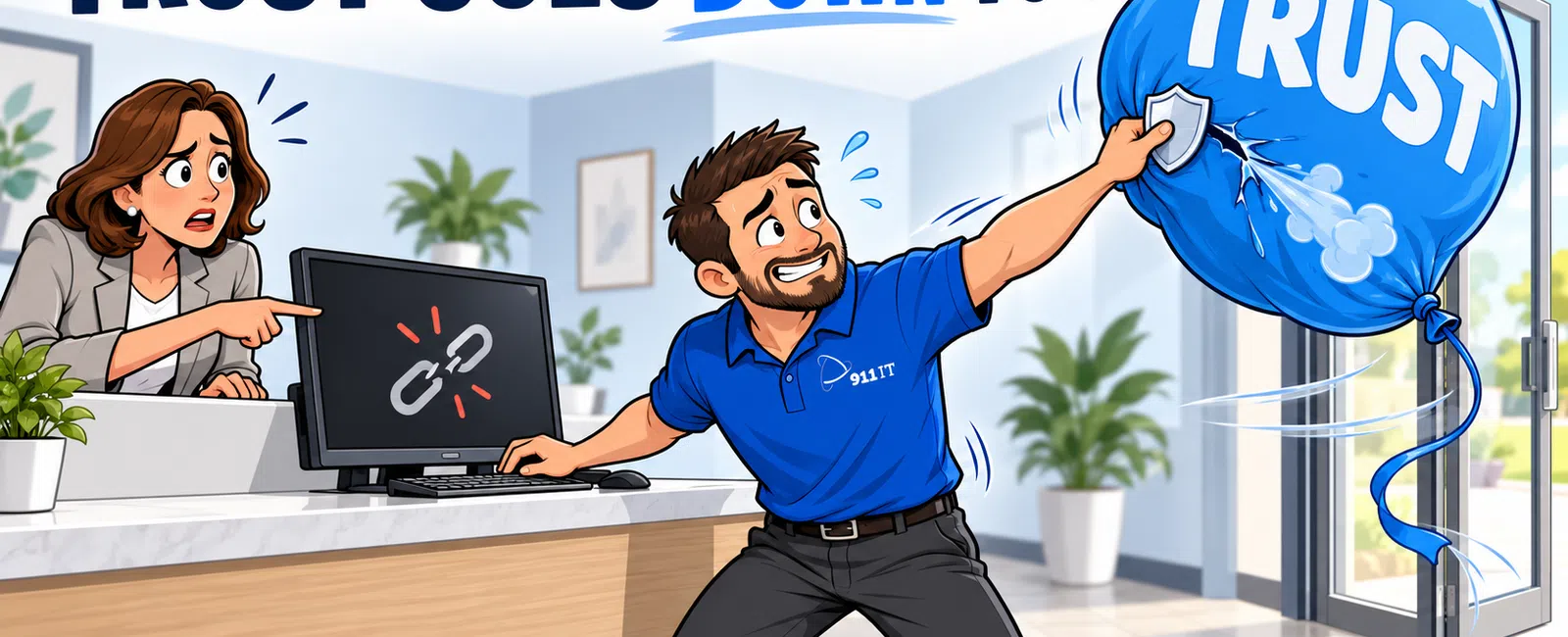
Every minute your systems are down creates a cost you can measure—and another one you may not notice right away.
To your team, downtime looks like a technical issue with a fix and a timeline. To your customers, it looks like a business that wasn't there when it mattered most. And that absence can raise doubts that last well beyond the outage itself.
Even if your systems are restored in a few hours, the impact on confidence can continue much longer.
Here's how downtime reaches beyond IT and why true recovery means more than getting technology back online.
Customers begin to doubt your reliability
Your customers expect your business to be available when they need it. That expectation shapes every touchpoint, from logging in and placing an order to asking for help or waiting on a response.
When access suddenly disappears, trust takes a hit. What feels like a short disruption on your side can feel like a warning sign on theirs.
That change in perception affects the entire experience. Delays feel more frustrating, responses seem less reliable and even minor issues can become major concerns.
Prospects may choose a competitor instead
Downtime doesn't just impact current customers. It can also cost you opportunities you never get to see.
Prospects usually contact you when they're close to a decision. They've done the research, narrowed the field and are ready to move. That moment is brief—and it depends on your business being accessible.
If they can't reach you, they won't wait around. They'll move on to another provider and remove you from the shortlist.
This kind of loss rarely shows up in a report. There's no dashboard for missed conversations or abandoned buying decisions. The opportunity is gone before you even know it was there.
Bad experiences spread faster than good ones
A positive experience may go unnoticed, but a negative one rarely stays quiet.
When customers feel unsupported during a disruption, they share it in conversations, peer groups and industry circles. That puts your reputation in front of people who haven't even worked with you yet.
Online reviews amplify that effect. Even a small number of negative reviews tied to one incident can influence how new prospects view your business before they ever speak with you.
Those reviews often appear right when prospects are comparing options, which means you may lose their trust before you get the chance to earn it.
There's also a quieter consequence. Customers who have a poor experience are less likely to recommend you. That weakens referrals, which are often the source of your best new business.
Rebuilding trust takes longer than restoring systems
Getting systems back online doesn't instantly put things back to normal.
After a disruption, customer expectations change. People become more cautious, less forgiving and more selective about how they engage with your business. Some may even question your long-term reliability long after the outage is over.
These shifts often don't appear in your numbers right away. But by the time they do, the effect on revenue and retention is already underway.
Is your recovery plan ready before the next outage?
A recovery plan can't stop every disruption, but it can decide how effectively you respond when one happens.
That response plays a major role in how much trust you retain. Customers remember how you handled the pressure, not just how quickly your systems came back.
The real question isn't whether something will go wrong. It's whether you'll be prepared when it does.
Schedule your 10-minute discovery call with us to assess where you stand, spot gaps and walk away with a clear plan to make sure you're ready before anything breaks.


