
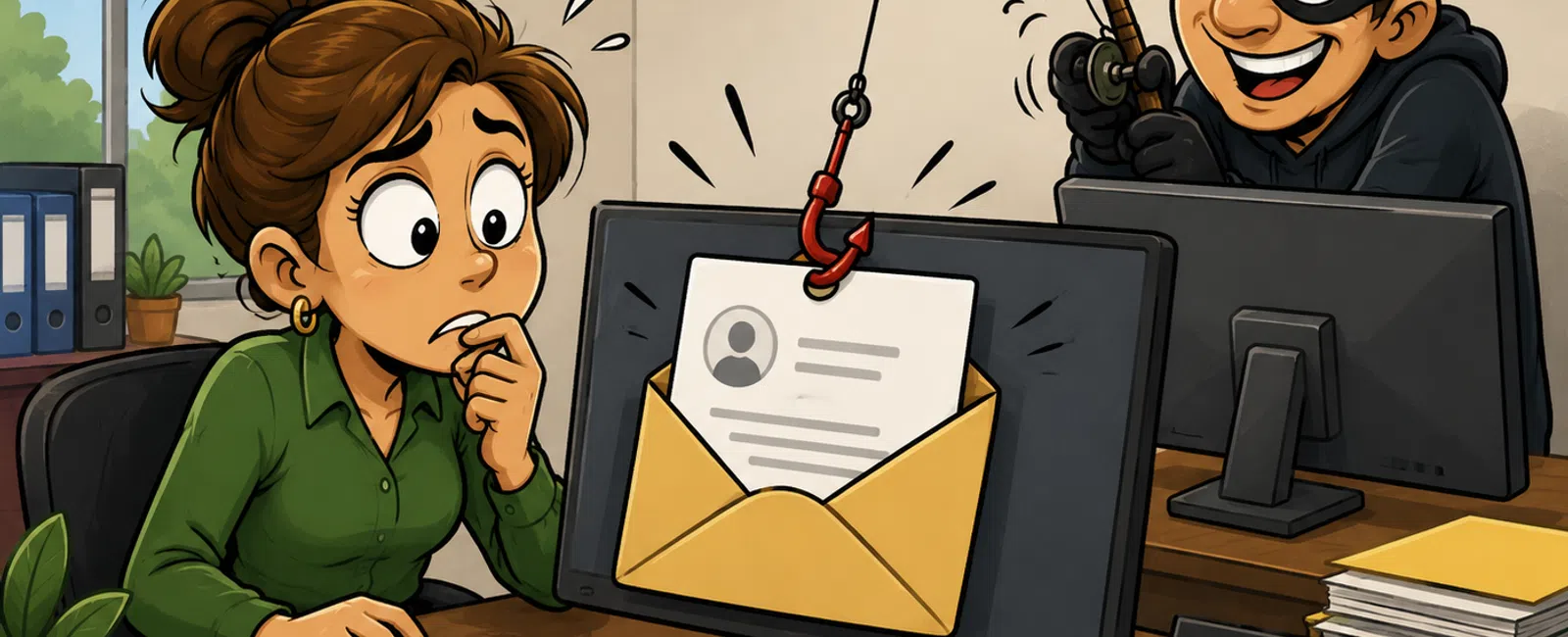
The First‑Week Mistake Real Estate Offices Never Plan For
The email shows up on a Tuesday morning.
It looks like it's from the broker.
The name is right. The tone feels familiar. Even the signature looks normal.
"Hey — can you help me with something quickly? I'm tied
up in meetings. I need you to handle a vendor payment. I'll explain later."
The new hire hesitates.
They've been with your office for four days. They're still
learning your systems, your people, and how things normally work. They
don't want to be the person who slows things down or questions leadership in
their first week.
So they help.
And just like that, the damage is done.
Why the first week is the most dangerous week
Spring and early summer are hiring season in real estate.
New assistants. New transaction coordinators. New agents joining the brokerage.
For your office, it's onboarding season.
For attackers, it's opportunity.
New employees are far more likely to fall for CEO or broker‑impersonation
emails than seasoned staff. Not because they're careless—but because everything
is unfamiliar. They don't yet know:
- How
the broker usually communicates
- Whether
payment requests ever come by email
- What "normal"
looks like in your office
- Who
they're allowed to double‑check with
Attackers don't target your most experienced people. They
target the ones still finding their footing.
And here's the part most business owners miss:
The most dangerous employee isn't careless. It's the one trying to be helpful.
The real gap isn't training. It's the system.
Think back to a new hire's first day in your office.
- Their
laptop wasn't fully ready
- Email
access was still being set up
- A
login got shared "just for today"
- A file
was saved locally because the shared drive wasn't accessible
- A
personal phone got used to look up a client number because it was faster
None of that felt risky. It felt practical. Like doing what
it takes to keep deals moving.
But during that first week, a few quiet problems start
stacking up:
- Shared
credentials create accounts no one tracks
- Files
sit outside your backups
- Personal
devices touch business data
- And no
one clearly explains what to do when something feels off
That's the environment a phishing email walks into.
The attack didn't create the vulnerability.
The first day did.
What a prepared first day actually looks like
Fixing this doesn't require a long security lecture on day
one. It requires a few things to be ready before the person walks
through your door.
1. Access is configured — not improvised
Their laptop is ready. Credentials are created. Permissions are defined. No
borrowed logins. No temporary shortcuts. No "we'll clean this up later."
2. They know what a normal request looks like in your
brokerage
This can be a simple, 10‑minute conversation:
- Does
the broker ever email about payments?
- Who
approves wire or vendor requests?
- What
should they do if something doesn't feel right?
That clarity alone prevents most first‑week mistakes.
3. They know exactly who to ask without feeling foolish
Most early mistakes happen quietly. New hires don't want to look inexperienced,
so they guess instead of asking.
Give them a person.
Give them a process.
The quiet truth about security mistakes
Most security incidents don't happen because someone ignored
the rules.
They happen because someone didn't know the rules yet.
Maybe your onboarding already feels solid. Maybe your office
is small and personal enough that things usually work themselves out.
But if you've ever had a new hire improvise their way
through week one—or if you're planning to bring someone on this spring—it's
worth tightening the system before that Tuesday email arrives.
If you want your onboarding, access, and security handled cleanly from day one, let's talk.
Call (801) 610-6000 or book a short discovery call.And if you know another broker‑owner who's about to hire,
send this their way.
The best time to close that door is before anyone walks through it.


