
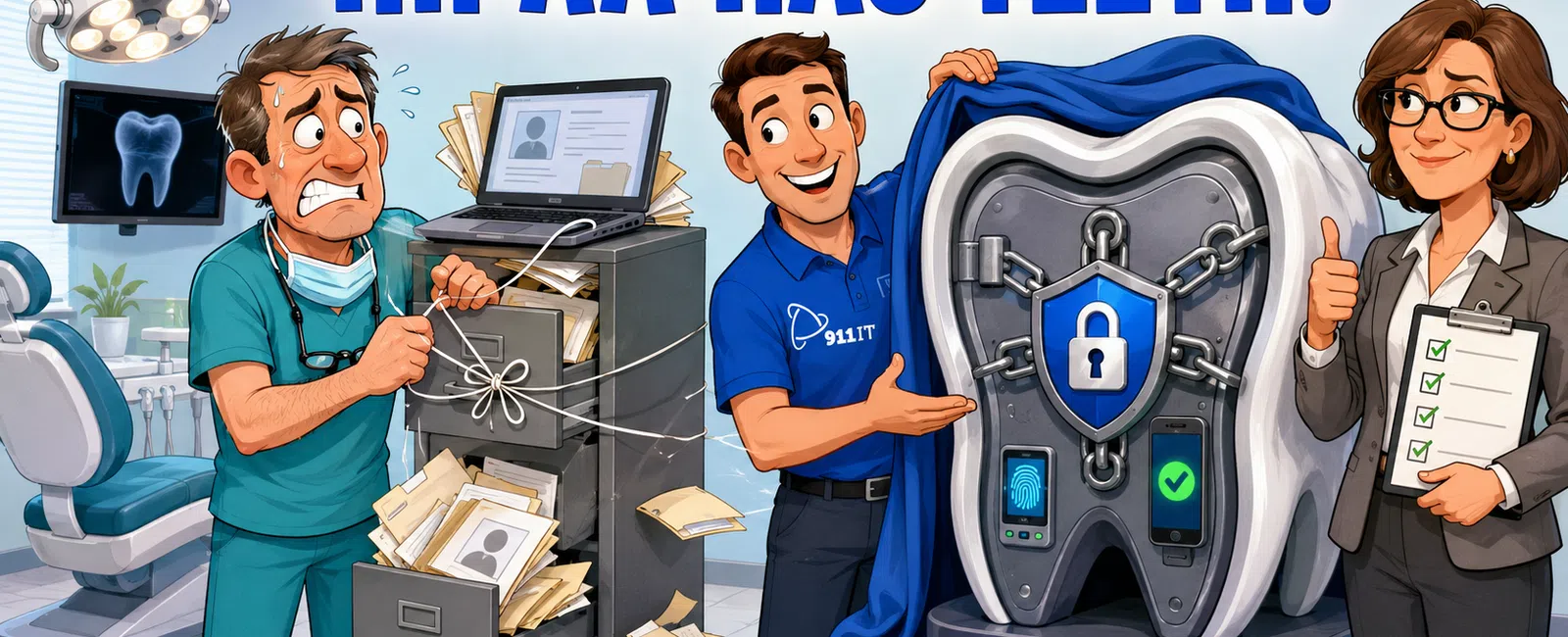
A dental practice that fails HIPAA compliance faces OCR fines ranging from $100 to $1.5 million per violation category annually, mandatory corrective action plans, forensic audits, potential criminal prosecution for willful neglect, patient lawsuits, and severe reputational damage that directly impacts patient retention and referral rates in competitive markets like Salt Lake City.
What Immediate Actions Does OCR Take When a Dental Practice Violates HIPAA
The Office for Civil Rights begins with a complaint investigation or compliance review. When a patient files a complaint about unauthorized PHI disclosure - perhaps a treatment plan emailed without encryption or an unredacted chart visible on a front-desk monitor - OCR opens a case file within 30 days.
OCR investigators request documentation proving your practice management system security settings, Business Associate Agreements with your dental software vendor and billing company, employee training records, and your most recent Security Risk Assessment. Many Salt Lake City dental practices discover gaps during this phase: missing BAAs with cloud backup providers, incomplete encryption on laptops used for mobile radiography review, or outdated access logs for terminated employees still in Dentrix or Eaglesoft.
If OCR finds violations, they issue a determination letter outlining specific failures. Minor violations - like a single instance of an unencrypted email containing appointment reminders - might result in technical assistance and voluntary compliance. Systematic failures trigger the enforcement process.
The investigation disrupts daily operations. Staff spend hours compiling documentation instead of scheduling patients. Your office manager fields OCR requests while managing operatory turnover. Clinical time shrinks as the practice owner reviews policies with legal counsel.
OCR investigations typically conclude within 180 days, but complex cases involving multiple breach instances or uncooperative practices extend beyond a year.
How Much Do HIPAA Fines Actually Cost Dental Practices
HIPAA violation penalties follow a four-tier structure based on culpability:
- Tier 1 (Unknowing violations): $100 to $50,000 per violation, with an annual maximum of $25,000 per violation category. A dental practice unaware that its patient portal lacked proper encryption might fall here.
- Tier 2 (Reasonable cause): $1,000 to $50,000 per violation, capped at $100,000 annually. This applies when a practice should have known about a risk - like failing to update firewall rules after a vendor warned about vulnerabilities in your PACS system.
- Tier 3 (Willful neglect, corrected within 30 days): $10,000 to $50,000 per violation, with a $250,000 annual cap. If your IT provider flagged unpatched servers hosting digital radiography images and you delayed the update, OCR considers this willful neglect even if you eventually fixed it.
- Tier 4 (Willful neglect, uncorrected): Mandatory minimum fines of $50,000 per violation with an annual maximum of $1.5 million per category.
Tier 4 violations - willful neglect left uncorrected - carry mandatory minimum fines of $50,000 per violation with an annual maximum of $1.5 million per category.
Real-world dental cases illustrate the financial impact. A multi-location dental group paid $10,000 after an employee accessed celebrity patient records without authorization. Another practice settled for $25,000 when a stolen unencrypted laptop contained 4,000 patient records. Larger breaches involving systematic failures have cost dental organizations six figures.
Beyond federal fines, state attorneys general can pursue additional penalties under state breach notification laws. Utah doesn't impose separate healthcare privacy fines beyond federal HIPAA, but practices serving patients across state lines face compounding exposure.
Legal defense costs add substantially to the financial burden. Retaining healthcare compliance attorneys to respond to OCR costs $15,000 to $50,000 for straightforward cases, more for complex multi-violation scenarios.
What Operational Burdens Follow a HIPAA Breach Discovery
The moment your practice identifies a breach - unauthorized access to PHI, a ransomware attack encrypting patient records, or a lost backup drive containing treatment histories - a compliance clock starts ticking. You have 60 days from discovery to notify affected patients, and OCR notification is required if the breach affects 500 or more individuals.
Breach notification involves direct costs: printing and mailing individual letters to every affected patient, purchasing credit monitoring services if Social Security numbers or financial data were exposed, and setting up a dedicated call center to field patient questions. For a 500-patient breach, notification costs alone run $20,000 to $40,000.
Your clinical team faces immediate disruption. If ransomware locked your Dentrix database, you're operating on paper charts while forensic investigators image servers and your IT team rebuilds systems. Appointments get rescheduled. Treatment planning stalls. Revenue drops precipitously during the recovery window.
Chair-side technology dependencies amplify the impact. Digital radiography systems, intraoral cameras, CAD/CAM units for same-day crowns - all require network connectivity to your practice management system. When that infrastructure is compromised, your clinical capacity shrinks to emergency-only care using portable equipment.
The administrative burden extends months beyond initial discovery. You'll implement a corrective action plan, conduct additional staff training, upgrade security controls, and submit progress reports to OCR on a schedule they dictate - often quarterly for two years.
Can Dental Practice Owners Face Personal Criminal Liability
Criminal HIPAA violations carry penalties beyond organizational fines. The Department of Justice prosecutes individuals who knowingly obtain or disclose PHI without authorization. Three criminal tiers exist, each with escalating consequences:
- Tier 1: Knowingly obtaining or disclosing PHI results in fines up to $50,000 and one year imprisonment. A dental office manager accessing patient records out of curiosity falls into this category.
- Tier 2: Obtaining PHI under false pretenses carries fines up to $100,000 and five years imprisonment. If a dentist fabricated a treatment justification to access a patient's full medical history without legitimate need, prosecutors could pursue Tier 2 charges.
- Tier 3: Obtaining or disclosing PHI with intent to sell, transfer, or use for commercial advantage, personal gain, or malicious harm brings penalties reaching $250,000 and ten years imprisonment. Selling patient lists to marketing companies or using patient data for identity theft triggers Tier 3 prosecution.
Practice owners bear responsibility for creating a culture of compliance. If systematic violations occur under your watch - employees routinely texting PHI without encryption, no access controls on EHR systems, failure to terminate system access for departed staff - prosecutors may pursue charges against ownership and management, not just the individual who committed the specific breach.
Professional licensing boards add another layer of personal consequence. State dental boards can suspend or revoke licenses for HIPAA violations that demonstrate unfitness to practice. A Utah dentist who repeatedly disregards patient privacy faces both federal prosecution and state licensure action.
Personal liability extends to civil lawsuits. Patients whose PHI was compromised can sue the practice and individual providers for damages, particularly if the breach resulted in identity theft, financial loss, or emotional distress.
How Do Patients React When Their Dental Practice Suffers a Data Breach
Patient trust evaporates rapidly after a breach notification letter arrives. In competitive dental markets like Salt Lake City, where patients have dozens of practice options within a ten-minute drive, a single breach can trigger mass defection to competitors.
Research shows 65% of breach victims lose trust in the organization that exposed their data. For dental practices, this translates directly to patient churn. Families who've been with your practice for years switch to competitors. New patient acquisition stalls as online reviews detail the breach and prospective patients choose practices without security incidents.
The financial impact compounds over time. A 1,000-patient practice losing 15% of its patient base - a conservative estimate post-breach - loses approximately $150,000 to $300,000 in annual revenue, depending on average patient value. High-value patients seeking cosmetic dentistry, implants, or orthodontics are especially likely to leave, skewing the financial impact higher.
Online reputation damage persists indefinitely. Breach notifications become public record when OCR posts them to the "Wall of Shame" - the public database of breaches affecting 500 or more individuals. Local news outlets often cover these incidents, especially in smaller markets where a dental practice breach affects a significant portion of the community.
Patient lawsuits follow major breaches. Class action attorneys target healthcare breaches aggressively, filing suits alleging negligence, breach of fiduciary duty, and violation of state consumer protection laws. Even if your practice ultimately prevails, defense costs and settlement payments drain resources.
Rebuilding trust requires years of consistent security demonstration, transparent communication, and zero additional incidents. Many practices never fully recover their pre-breach patient volume or community standing.
What Happens to Your Dental Software Vendor Relationships After a Violation
Business Associate Agreements govern your relationship with every vendor that touches PHI: your practice management software provider, cloud backup company, billing service, patient communication platform, and IT support firm. When a breach occurs, these relationships face immediate scrutiny.
If the breach originated with a business associate - say, your cloud backup vendor suffered a ransomware attack that exposed your patient database - you're still liable for notification and may face OCR penalties if you failed to properly vet the vendor's security controls or ensure an adequate BAA was in place.
Conversely, if your practice's internal failures caused the breach, business associates may terminate relationships to limit their own liability exposure. Enterprise software vendors serving multiple dental practices can't afford association with non-compliant customers. Your Dentrix or Eaglesoft contract might include termination clauses triggered by HIPAA violations.
Insurance carriers react swiftly to breaches. Cyber liability and professional liability insurers increase premiums dramatically after a claim, often by 50% to 200%. Some insurers decline renewal entirely, forcing practices into high-risk pools with limited coverage at premium prices.
Banking relationships suffer when breaches involve payment card data. If your practice processes credit cards and a breach exposes card numbers, you'll face PCI DSS penalties, potential loss of merchant account privileges, and mandatory forensic audits costing $20,000 to $100,000.
Vendor relationships become more expensive post-breach. New contracts include stricter security requirements, more frequent audits, and higher service fees to offset the vendor's increased risk.
Why Salt Lake City Dental Practices Need Local HIPAA Compliance Partners
Utah's rapid population growth - among the fastest in the nation - drives dental practice expansion and increased competition. New practices open regularly in Salt Lake City, Provo, and South Jordan, each vying for the same patient base. A HIPAA breach in this environment doesn't just cost fines; it hands your competitors a decisive advantage.
Local IT support matters for dental practices because chair-side technology failures require immediate on-site response. When your digital radiography system goes offline mid-appointment, you can't wait for a national helpdesk to escalate your ticket through three tiers of support. You need someone who knows your Dentrix configuration, understands your PACS integration, and can arrive on-site within an hour.
Large national MSPs treat small dental practices as ticket numbers in a queue. Your three-operatory practice in South Jordan is one account among thousands, serviced by rotating junior technicians who don't know your specific software stack or compliance requirements. When a HIPAA-related security question arises - "Should we allow staff to access patient records from home?" - you get generic advice, not guidance tailored to dental workflows and Utah market realities.
911 IT's South Jordan location at 1124 South Jordan Parkway enables rapid response for Salt Lake City area dental practices. When a server fails or ransomware hits, proximity matters. The firm's focus on healthcare compliance - including dedicated HIPAA compliance services - means they understand the specific security requirements for practice management systems, digital imaging, and patient portals that dental practices depend on.
Industry-specific expertise separates adequate IT support from genuine partnership. Dental practices need providers who understand treatment planning software vulnerabilities, know how to secure intraoral camera integrations, and can configure network segmentation that protects PHI without disrupting clinical workflows. Generic IT support can't deliver this depth.
Compliance isn't a one-time project - it's an ongoing operational requirement. Annual Security Risk Assessments, quarterly staff training, continuous monitoring for unauthorized access attempts, regular BAA reviews, and immediate response to emerging threats all require consistent partnership. National providers rotate account managers and technicians constantly. Local firms like 911 IT build relationships where your practice manager knows exactly who to call when a compliance question arises.
The firm's managed IT services include 24-7 monitoring and helpdesk support, critical for dental practices operating extended hours or offering emergency services. When a security alert triggers at 8 PM during an evening appointment block, you need immediate response, not a voicemail promising callback the next business day.
Flat-rate transparent pricing eliminates the compliance budget uncertainty that plagues dental practices. When you're quoted hourly rates for security updates, you hesitate to call about potential vulnerabilities, creating gaps that lead to breaches. 911 IT's predictable pricing model encourages proactive communication about security concerns before they become OCR investigations.
Multi-location dental practices and emerging DSOs in Utah need scalable solutions that maintain consistent security across sites. 911 IT's experience with Utah-wide IT support means they can implement unified security policies whether you're operating two operatories in South Jordan or ten locations across the Wasatch Front.
The 100% Satisfaction Guarantee demonstrates confidence in service delivery - critical when your practice's compliance posture and patient trust depend on IT reliability. Dental practices can't afford to gamble on unproven providers when the stakes include six-figure fines and practice-ending reputation damage.
Frequently Asked Questions
What are the most common HIPAA violations in dental offices
The most frequent dental HIPAA violations include improper disposal of patient records, unauthorized PHI access by staff, lack of encryption on devices containing patient data, missing Business Associate Agreements with vendors, inadequate access controls on practice management systems, failure to conduct Security Risk Assessments, and unsecured transmission of patient information via email or text without proper safeguards.
How long does a dental practice have to report a HIPAA breach
Dental practices must notify affected patients within 60 days of discovering a breach. If the breach affects 500 or more individuals, you must also notify OCR within 60 days and notify prominent media outlets. Breaches affecting fewer than 500 individuals are reported to OCR annually. Delayed notification beyond these timeframes results in additional penalties and demonstrates lack of compliance infrastructure.
Can a dental practice lose its license over HIPAA violations
While federal HIPAA violations don't directly revoke dental licenses, state dental boards can suspend or revoke licenses for conduct demonstrating unfitness to practice, which may include systematic HIPAA violations. Repeated breaches, willful neglect of patient privacy, or criminal HIPAA convictions trigger state board investigations that can result in license restrictions, mandatory compliance training, probation, or permanent license revocation depending on severity.
What insurance covers HIPAA fines and breach costs for dental practices
Cyber liability insurance typically covers breach notification costs, credit monitoring services, forensic investigation, public relations support, and legal defense, but most policies exclude regulatory fines and penalties. Professional liability insurance rarely covers HIPAA violations. Dental practices need specific cyber liability policies with breach response coverage, and should verify whether regulatory fines are covered, as many insurers exclude them.
How much does HIPAA compliance cost for a small dental practice
HIPAA compliance services for dental practices typically range from $50 to $200 per user monthly, depending on practice size, existing security infrastructure, and required remediation. This includes Security Risk Assessments, policy development, staff training, technical safeguards implementation, and ongoing monitoring. Initial setup costs for practices starting from scratch add $5,000 to $15,000 for security infrastructure upgrades, software licensing, and comprehensive documentation.


