Your AI Intern Is Already Working. Who's Accountable for the Results?
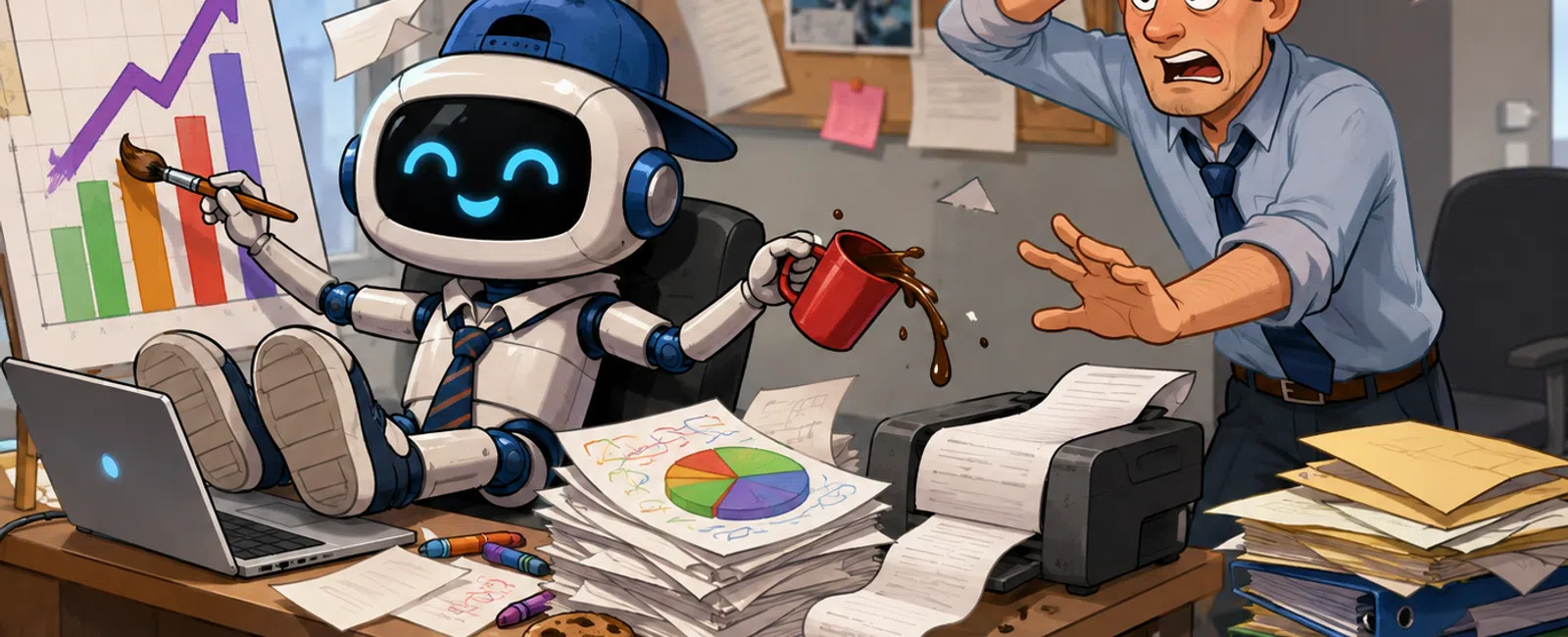
The document looked solid.
Clear structure. Confident language. Professional formatting.
Then a client asked a simple follow‑up question.
The market data supporting the recommendation wasn't just
wrong — it didn't exist. The citations were fabricated. The numbers were
invented. And no one on the team could explain where they came from.
The AI didn't "break."
It did exactly what it was allowed to do.
What failed was supervision.
This is how most AI problems show up inside otherwise
competent organizations: not as a breach, not as a scandal, but as a quiet
credibility failure that surfaces only when someone external asks for proof.
AI Isn't the Risk. Unowned AI Is.
Most businesses didn't formally "roll out" AI. It simply
arrived.
It showed up inside email. Inside documents. Inside CRMs and
project tools. Someone clicked the button. The output looked good. Work moved
faster. No alarms went off.
So everyone assumed it was fine.
That assumption is the risk.
When AI use isn't explicitly owned, four things happen every
time:
- No one
is accountable for how it's used
- No one
defines what data is off‑limits
- No one
verifies outputs consistently
- Leadership
only learns there's a problem when it's already external
In audits, disputes, or board reviews, "we didn't realize
the tool did that" is not a defensible position. The business owns the outcome
— not the software.
Where This Breaks in Real Companies
The most common failure point is document drafting.
A proposal, report, or recommendation is under deadline
pressure. Someone uses AI to "strengthen the justification." The system fills
in supporting research that sounds plausible. Sources look real. Language is
polished.
No one checks it.
That document leaves the organization.
This is not hypothetical. It's one of the most frequent AI‑related
cleanup scenarios IT teams see — not because AI malfunctioned, but because no
review step existed before external use.
What's Missing in Most AI Policies (If They Exist at All)
No Role Clarity
AI oversight usually falls between IT, Operations, Legal,
and Compliance — which means no one actually owns it.
AI supervision requires one named role responsible
for:
- Approved
tools
- Data
boundaries
- Review
standards
- Updates
as tools change
If ownership is shared, accountability is diluted.
No Approved vs. Not Approved Examples
"Use AI responsibly" is meaningless guidance.
Employees need explicit boundaries:
Generally acceptable
- Internal
drafts inside approved tools
- Brainstorming,
formatting, and summarization
- Content
that stays internal until reviewed
Not acceptable
- Client
names or identifiable data
- Contracts
or legal language
- Financials
or forecasts
- Employee
records
- Any
external submission without human review
If people have to guess, they will guess wrong — usually
under time pressure.
No Cost Framing
Without consequences, AI risk feels abstract.
Here is the real cost of ignoring this:
- One
fabricated statistic damages credibility instantly
- One
compliance question without an answer escalates fast
- One
data leak traced to "employee AI use" is still your liability
AI failures don't announce themselves. They surface when
someone external asks for proof.
The Minimum Acceptable AI Supervision Framework
This is not a policy. It's a baseline.
AI Supervision Checklist (Print‑Ready)
- Approved
tools list is short, visible, and enforced
- Data
boundaries are explicit and non‑negotiable
- Human
review is required for anything external
- Output
ownership and data retention are understood
- One
role owns oversight and updates
If you can't confidently check every box, your AI is
effectively unsupervised.
How You'll Be Judged — Not How It Feels Internally
Internally, AI usage feels productive.
Externally, it's evaluated differently.
Auditors, regulators, clients, and boards don't ask: "Was
the tool helpful?"
They ask:
- Who
approved this process?
- How
was data protected?
- How
was accuracy verified?
- Who is
accountable?
If you don't have clear answers now, you won't have time to
create them later.
What To Do in the Next Seven Days
Schedule a short internal reality check — not a workshop.
List the AI tools your team is actually using. Compare that
to what leadership thinks is being used. Identify where sensitive data could be
leaving the organization unintentionally.
That single exercise surfaces more risk than most technical
audits — and it costs nothing but attention.
Final Word
AI doesn't fix broken processes.
It accelerates them.
The companies that struggle won't be the ones that used AI.
They'll be the ones that never decided how it should be used.
Reach out to 911 IT right now to put proper AI
supervision in place before this becomes a bigger issue.