
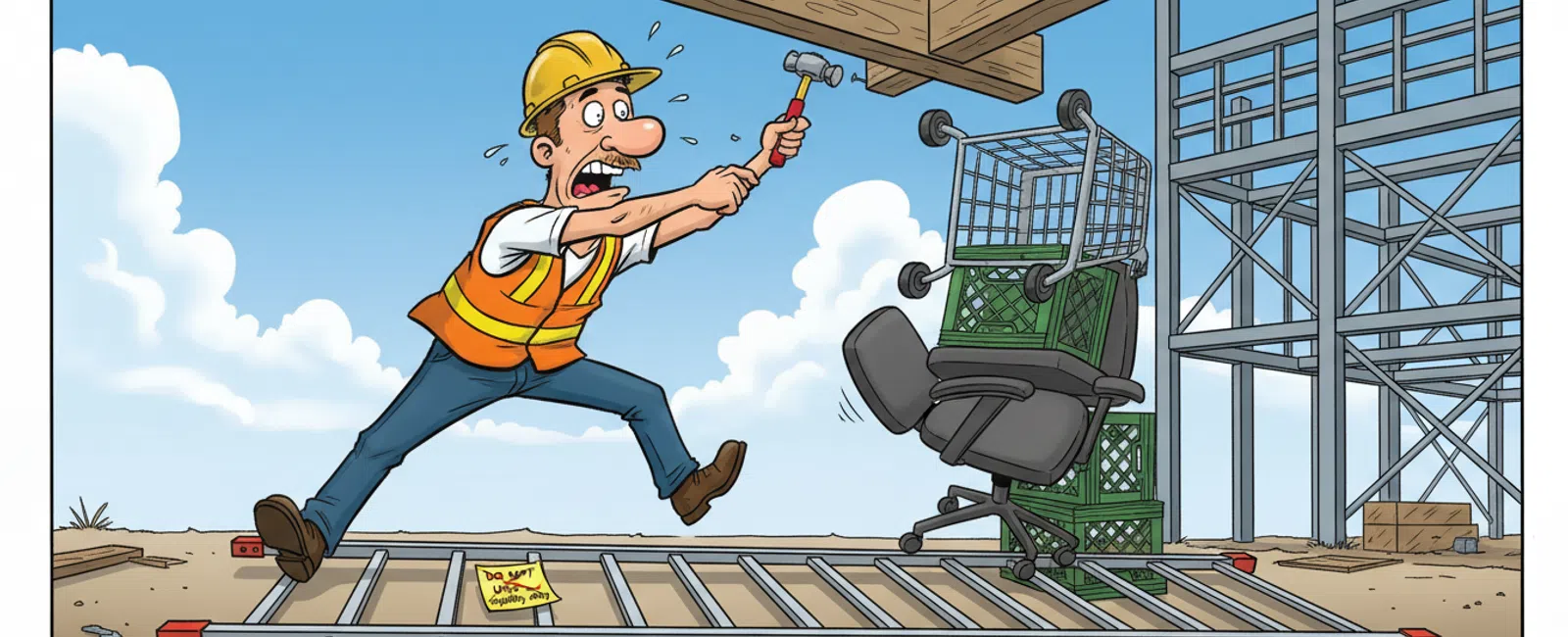
The most common OSHA violation in construction is fall protection (29 CFR 1926.501), cited 5,915 times in fiscal year 2023. This violation accounts for more citations than any other standard and reflects the persistent challenge of protecting workers at elevated job sites. Scaffolding, ladders, and respiratory protection round out the top five most frequently cited violations across construction workplaces nationwide.
Fall protection violations represented 5,915 citations in FY 2023, making it the #1 OSHA construction violation for 13 consecutive years.
Why Does Fall Protection Lead OSHA Construction Violations?
Fall protection tops the list because construction inherently involves elevated work. Roofing crews, steel workers, and general contractors routinely operate at heights where fall hazards exist. Despite clear regulations requiring guardrails, safety nets, or personal fall arrest systems for work above six feet, many sites still have gaps in compliance.
The violation persists due to several factors: inadequate training, missing or damaged equipment, and pressure to complete jobs quickly. Workers sometimes bypass safety systems to save time, and smaller contractors may lack the resources to implement comprehensive fall protection programs.
Documentation gaps compound the problem. Even when equipment exists on-site, contractors often fail to maintain records proving worker training, equipment inspections, or hazard assessments.
Digital systems that track certifications, inspection schedules, and safety documentation help construction companies demonstrate compliance during OSHA inspections. Modern project management platforms integrate safety checklists directly into daily workflows, making it harder to overlook required protections.
Proactive documentation and equipment tracking reduce citation risk significantly.
What Are the Top 10 OSHA Violations in Construction?
Understanding the complete list helps construction firms prioritize safety investments and training. The top violations represent the areas where OSHA inspectors find the most frequent non-compliance during site visits.
| Rank | Violation Type | OSHA Standard | FY 2023 Citations |
|---|---|---|---|
| 1 | Fall Protection | 1926.501 | 5,915 |
| 2 | Hazard Communication | 1926.1200 | 2,424 |
| 3 | Respiratory Protection | 1926.103 | 2,185 |
| 4 | Scaffolding | 1926.451 | 2,058 |
| 5 | Ladders | 1926.1053 | 2,026 |
| 6 | Control of Hazardous Energy (Lockout/Tagout) | 1910.147 | 1,837 |
| 7 | Powered Industrial Trucks | 1910.178 | 1,761 |
| 8 | Fall Protection Training Requirements | 1926.503 | 1,556 |
| 9 | Eye and Face Protection | 1926.102 | 1,401 |
| 10 | Machine Guarding | 1910.212 | 1,223 |
Hazard communication violations stem from inadequate Safety Data Sheets (SDS) management and failure to train workers on chemical hazards. Many construction sites use dozens of different materials, each requiring proper labeling and documentation.
Respiratory protection citations often involve silica dust exposure during cutting, grinding, or demolition. New silica standards have increased scrutiny, and contractors must document fit testing, medical evaluations, and training for workers using respirators.
The pattern across these violations reveals a common thread: inadequate documentation and training records. Construction firms that implement digital safety management systems can automate compliance tracking, send training reminders, and maintain audit-ready records accessible from any job site.
Addressing the top five violations eliminates the majority of citation risk.
How Do OSHA Inspections Work in Construction?
OSHA conducts construction inspections through several triggers: employee complaints, referrals from other agencies, severe injuries or fatalities, and planned inspections targeting high-hazard industries. Unlike scheduled visits, most construction inspections happen without advance notice.
When an inspector arrives, they conduct an opening conference explaining the inspection scope, then perform a walkaround examining the site for visible hazards. Inspectors review safety programs, training records, injury logs, and equipment certifications. They interview workers privately about safety practices and may take photographs or measurements.
The closing conference summarizes findings. Serious violations carry penalties averaging $15,625 per citation in 2024, while willful or repeated violations can reach $156,259 each. Beyond fines, citations damage a contractor's reputation and can disqualify firms from bidding on certain projects.
Digital document management becomes critical during inspections. Inspectors expect immediate access to training records, equipment certifications, hazard assessments, and safety meeting documentation. Contractors who store these records in cloud-based systems can retrieve them instantly from trailer offices or field locations.
Clay from a Salt Lake City construction firm shared: "911 IT's response time has been so great! Most of the time they will resolve our issue before we hang up the phone. When we find ourselves in IT trouble we are usually in a mess until we call 911 IT and they get things working again."
Reliable backup systems ensure safety documentation survives equipment failures or job site incidents. Business continuity planning protects the compliance records that demonstrate your safety program's effectiveness.
Immediate document access during inspections demonstrates organizational competence and reduces citation severity.
What Technology Helps Construction Companies Maintain OSHA Compliance?
Modern construction management software integrates safety compliance directly into project workflows. Platforms like Procore, Buildertrend, and CoConstruct include modules for safety inspections, incident reporting, and training tracking that create automatic audit trails.
Mobile apps allow field supervisors to complete daily safety checklists, photograph hazards, and document corrective actions from smartphones or tablets. These digital records timestamp every entry and sync to central databases accessible during OSHA inspections.
Wearable technology and IoT sensors monitor environmental conditions like noise levels, air quality, and heat stress. Automated alerts notify supervisors when conditions exceed safe thresholds, creating documented evidence of proactive hazard management.
Cloud-based document management systems centralize Safety Data Sheets, equipment manuals, training certificates, and inspection reports. Workers at remote Utah, Wyoming, or Arizona job sites access the same current documentation as office staff, ensuring consistency across multi-state operations.
CAD and BIM software now includes safety planning features that identify fall hazards, confined spaces, and other risks during the design phase. This pre-construction hazard analysis creates documentation showing deliberate safety consideration before work begins.
However, technology only helps when systems remain operational. Construction firms need reliable IT support that understands job site connectivity challenges, provides rapid response when systems fail, and maintains secure backups of compliance documentation.
Jaren, who manages a construction company, noted: "We have loved the peace of mind using 911 IT has given us. They are great at answering their phone and solving our problems quickly. I really like how quickly they respond to my questions and concerns."
Salt Lake City's growing construction market means firms compete for projects where safety records matter. Clients increasingly request EMR (Experience Modification Rate) scores and OSHA citation histories before awarding contracts. Strong safety documentation supported by reliable technology becomes a competitive differentiator.
Integrated safety technology transforms compliance from paperwork burden to competitive advantage.
How Can Construction Firms Reduce Their OSHA Violation Risk?
Reducing violation risk starts with a documented safety program that addresses the top ten violations. This program must include written policies, regular training, hazard assessments, and clear accountability for safety responsibilities at every organizational level.
Conduct weekly toolbox talks addressing specific hazards present on current projects. Document attendance and topics covered. These brief meetings keep safety top-of-mind and create records demonstrating ongoing training efforts.
Implement pre-task planning for high-risk activities. Before starting work at heights, in confined spaces, or with hazardous materials, crews should complete a written plan identifying hazards and required protections. This planning process catches missing equipment or training gaps before work begins.
Assign a competent person for each major hazard category. OSHA requires designated individuals with authority to stop work when they identify unsafe conditions. Document these appointments and provide specialized training for competent persons.
Perform regular self-audits using OSHA's inspection checklists. Identifying and correcting violations internally costs far less than citations. Many construction firms schedule monthly safety walks with different crew leaders to gain fresh perspectives on hazards.
Invest in quality equipment and maintain it properly. Damaged fall protection gear, worn ladder rungs, or missing scaffold guardrails create both safety hazards and citation opportunities. Equipment inspection logs demonstrate maintenance diligence.
Technology infrastructure supports all these efforts. Secure systems protect sensitive safety data from ransomware that could destroy compliance records. Reliable networks ensure field crews can access current safety procedures and report hazards in real-time.
Utah's winter weather creates additional challenges. Snow, ice, and temperature extremes affect equipment performance and worker safety. Construction firms operating across Utah, Wyoming, and Arizona need IT systems with robust disaster recovery capabilities that maintain access to safety documentation during weather events.
Systematic safety management supported by reliable technology infrastructure minimizes citation risk.
Frequently Asked Questions
What is the penalty for OSHA fall protection violations?
OSHA classifies fall protection violations as serious, carrying penalties up to $15,625 per citation in 2024. Willful or repeated fall protection violations can result in fines up to $156,259 per violation. Penalties increase based on company size, violation severity, and history of previous citations. Abatement costs and potential project delays add substantial indirect costs beyond the citation itself.
How often does OSHA inspect construction sites?
OSHA inspects construction sites based on priority: imminent danger situations receive immediate attention, followed by fatalities and catastrophes, worker complaints, referrals, and planned inspections of high-hazard industries. Construction faces higher inspection rates than most industries due to elevated injury risk. Large projects and companies with poor safety records receive more frequent attention, though any site may face unannounced inspection.
Do small construction companies get OSHA violations?
Yes, OSHA enforces standards regardless of company size. Small construction firms actually face proportionally higher citation rates because they often lack dedicated safety staff and formal compliance programs. However, OSHA does reduce penalties by up to 60% for employers with fewer than 25 workers. Small contractors still need documented safety programs, training records, and hazard assessments to demonstrate compliance efforts.
What records must construction companies keep for OSHA compliance?
Construction firms must maintain injury and illness logs (OSHA Form 300), training records showing topics and attendee names, equipment inspection logs, hazard assessments for each project phase, Safety Data Sheets for all chemicals, and competent person designations. Records must be readily accessible during inspections. Most documentation must be retained for five years, though some training records require longer retention based on specific standards.


