
The First Week Mistake Nobody Plans For — And Why It Quietly Puts Financial Firms at Risk
The email arrives early in the morning.
It looks like it's from the executive team. The name checks out. The tone feels
right. The request is short, urgent, and framed as trust.
"Can you help me with something quickly? I'm in meetings all
day. I need you to handle a vendor payment."
The employee hesitates. They've been at the firm for less
than a week. They're still learning systems, names, and norms. They don't want
to be the person who slows things down or questions leadership.
So they help.
And that's when the real damage begins — not because of
carelessness, but because the system around them wasn't ready.
Why the First Week Is the Most Dangerous Week in a
Financial Firm
In regulated environments like financial services, the first
week of employment is a blind spot.
New hires are capable, motivated, and trying to prove they
belong — but they haven't yet built the internal instincts that protect
organizations from subtle threats. Everything is unfamiliar. Nothing feels
settled. And uncertainty is exactly what attackers exploit.
They don't target your most seasoned staff. They target the
person who doesn't yet know what "normal" looks like in your firm.
The issue isn't awareness. It's timing.
When onboarding is incomplete, security becomes optional.
And optional security is where impersonation, misdirected payments, and
compliance failures quietly take root.
The Real Gap Isn't Training — It's the System
Most firms assume risk shows up when someone breaks a rule.
In reality, risk shows up before the rules are even clear.
Think about a typical first day:
- Access
is still being finalized
- A
login is borrowed "just for now"
- A file
is saved locally because the shared drive isn't accessible yet
- A
personal phone is used to look something up because it's faster
- No one
explains what to do if a request feels off
None of this feels reckless. It feels resourceful. Like
doing what needs to get done.
But this is how untracked access, unmanaged data, and audit
gaps form — especially in firms handling regulated financial and taxpayer
information.
The attack doesn't create the vulnerability. The first day
does.
Where This Usually Breaks in Financial Firms
Here's the most common failure pattern:
A new hire receives an email that appears to come from
leadership requesting a payment, vendor update, or wire-related task. The
message is urgent but polite. No attachments. No obvious red flags.
The employee doesn't know:
- Whether
executives ever request payments by email
- What
the normal approval path looks like
- Who
they're allowed to question during week one
So they comply.
From the outside — an auditor, regulator, insurance carrier,
or board member — this is never viewed as a "new employee mistake."
It's viewed as:
- Inadequate
access controls
- Weak
onboarding governance
- Poor
segregation of duties
- Failure
to establish secure processes before granting authority
Intent doesn't matter. Outcomes do.
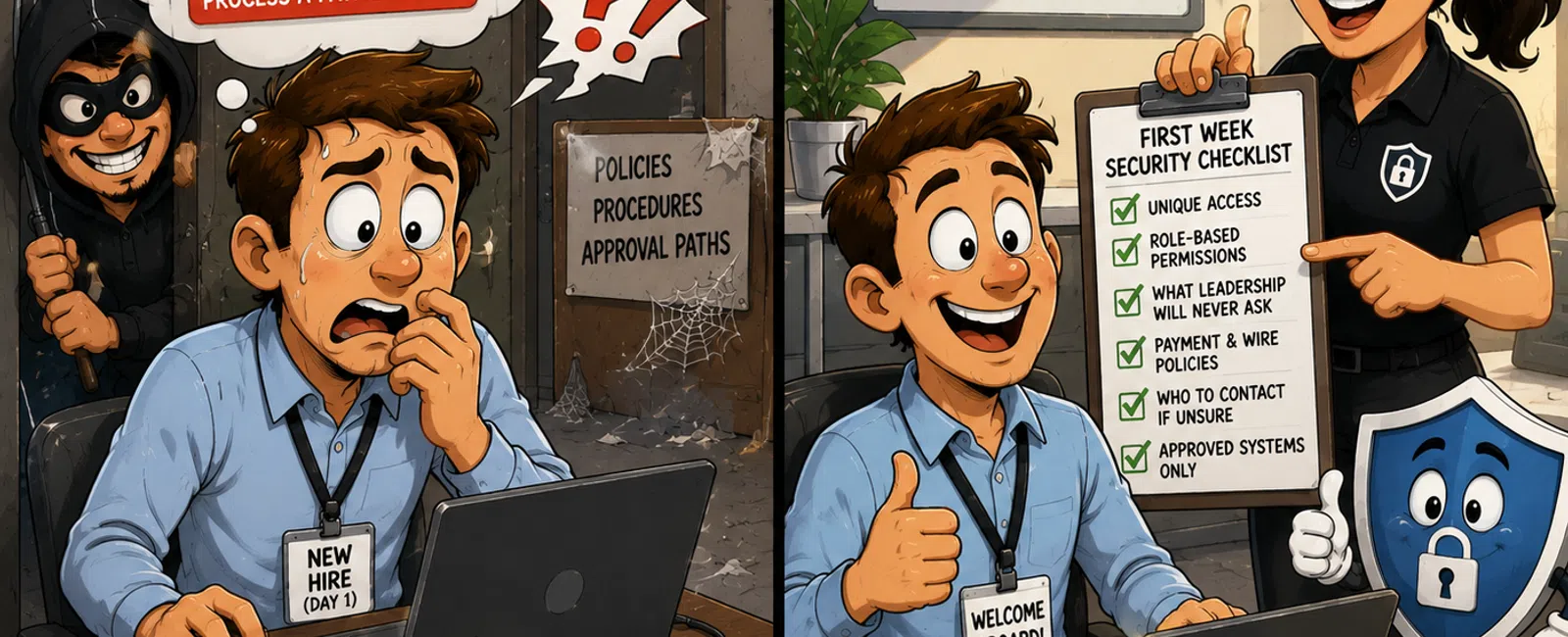
The Minimum Acceptable First-Week Security Framework
If any item below is missing, the firm is exposed.
Before Day One
- Laptop
provisioned, patched, and encrypted
- Unique
credentials created — no shared or temporary logins
- Role-based
permissions clearly defined and documented
On Day One
- A
10-minute explanation of what leadership will never ask for by email
- Clear
payment, wire, and vendor request rules
- A
named person to contact when something feels off
During Week One
- Confirmation
that all files live only in approved systems
- Verification
that no personal devices accessed firm data
- Explicit
instruction on how to report suspicious requests without hesitation
This isn't advanced security. It's operational discipline.
The One Thing to Do Next Week
Before your next hire starts — even if that's weeks away —
walk through your onboarding process step by step and identify where access,
authority, or expectations are being improvised instead of defined.
If improvisation exists, risk exists.
What to Do Right Now
Fix this before it becomes an incident.
Reach out to your IT partner right now and review your onboarding and access
controls so these gaps are closed before the next hire walks in the door.


