
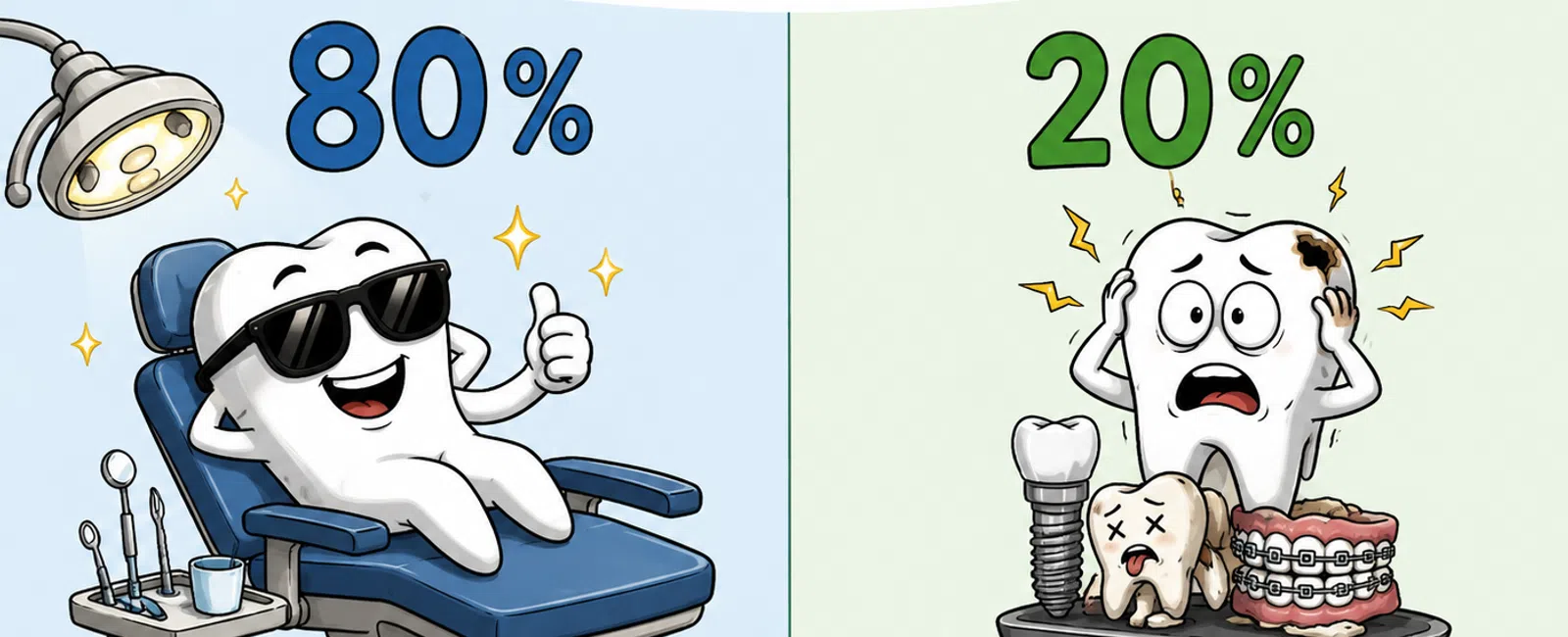
The 80/20 rule in dentistry, also called the Pareto Principle, states that approximately 80% of a dental practice's revenue typically comes from 20% of its patient base. These high-value patients schedule regular appointments, accept comprehensive treatment plans, maintain consistent hygiene visits, and refer new patients. Understanding this distribution helps practices allocate resources more effectively and improve patient retention strategies.
How Does the 80/20 Rule Apply to Dental Practice Revenue?
Most dental practices discover that a small segment of their patient population drives the majority of production. These patients accept treatment recommendations, maintain regular recall schedules, and rarely miss appointments.
The remaining 80% of patients contribute only 20% of revenue. They may visit sporadically, decline elective procedures, or only seek emergency care. This imbalance isn't a failure - it's a natural distribution pattern observed across industries.
Identifying your top 20% requires analyzing patient records for treatment acceptance rates, annual revenue per patient, appointment consistency, and referral activity. Most practice management software can generate these reports with filters for visit frequency and lifetime value.
Once identified, these patients deserve priority scheduling, personalized communication, and proactive outreach. A patient who generates $5,000 annually and refers three new patients has fundamentally different value than someone who visits once every three years for a cleaning.
Practices that focus retention efforts on their top 20% of patients see measurably higher revenue stability and growth.
What Characteristics Define High-Value Dental Patients?
High-value patients share predictable behavioral patterns. They schedule and keep hygiene appointments every six months without reminders. They accept treatment plans for crowns, implants, and cosmetic procedures rather than deferring care.
These patients also demonstrate strong engagement. They respond to practice communications, update their medical histories promptly, and arrive prepared for appointments. Many carry dental insurance with good coverage or pay out-of-pocket without hesitation.
Referral activity distinguishes exceptional patients from merely good ones. A patient who brings in family members, colleagues, or friends multiplies their value beyond their own treatment revenue.
Trust plays a central role. High-value patients view their dentist as a healthcare partner, not a vendor. They follow post-treatment instructions, maintain home care routines, and ask questions about preventive strategies.
These patients rarely shop on price alone. They value expertise, convenience, and relationship continuity over finding the cheapest cleaning or crown.
How Can Dental Practices Retain Their Top 20% of Patients?
Retention starts with recognition. High-value patients should receive priority scheduling, flexible appointment times, and minimal wait times. Small gestures - remembering personal details, sending birthday cards, or offering complimentary services - build loyalty.
Communication quality matters significantly. These patients expect prompt responses to questions, clear treatment explanations, and proactive outreach about upcoming appointments or new services. Practices that rely on outdated phone systems or slow email responses risk losing their best patients to competitors.
Sarah, a Salt Lake City dental practice manager, experienced this firsthand: "911 IT was phenomenal to work with! After calling tech after tech to come out to find out the issues with our phone lines, Adam came out within a few hours and FIXED our phones immediately! He took the time to LOOK what was wrong instead of just glancing at the issues and bidding us out at thousands of dollars." Reliable communication infrastructure directly impacts patient experience and retention.
Technology reliability extends beyond phones. Healthcare IT support ensures EHR systems, patient portals, and digital imaging tools function without disruption. When high-value patients encounter technical problems during check-in or can't access their portal, frustration builds quickly.
Personalized care plans strengthen relationships. Discussing long-term oral health goals, tracking progress over time, and adjusting treatment approaches based on patient feedback demonstrate commitment beyond transactional dentistry.
Retention also requires protecting patient data. HIPAA compliance isn't optional - breaches destroy trust instantly and expose practices to significant legal and financial consequences.
Why Do Dental Practices Lose High-Value Patients?
Patient attrition among top revenue generators often stems from preventable issues. Scheduling difficulties rank high - when patients can't get convenient appointment times or face long wait times, they explore alternatives.
Communication breakdowns cause significant losses. Unreturned phone calls, delayed treatment plan follow-ups, or generic mass emails make patients feel undervalued. High-value patients expect personalized attention proportional to their loyalty and spending.
Technology failures create friction points. Slow check-in processes, crashed practice management systems, or non-functional patient portals signal operational problems. Patients who experience repeated technical issues question whether the practice can deliver quality care.
Staff turnover disrupts relationships. When patients lose their trusted hygienist or front desk contact, connection weakens. Practices must document patient preferences and communication history so any team member can provide consistent service.
Insurance changes and coverage limitations sometimes force patients to switch providers. While practices can't control insurance networks, they can offer flexible payment plans or membership programs to retain patients who lose coverage.
Competitor practices with better technology, more convenient hours, or superior patient experience steadily attract dissatisfied patients. The barrier to switching dentists has dropped significantly with online reviews and digital appointment booking.
How Should Practices Invest Resources Based on the 80/20 Rule?
Resource allocation should reflect revenue contribution. Marketing budgets should prioritize retention campaigns for existing high-value patients over broad acquisition efforts. A 5% increase in retention among top patients generates more revenue than a 20% increase in new patient volume.
Staff training should emphasize relationship management and service excellence for high-value patients. Front desk teams need skills to recognize these patients, accommodate special requests, and resolve issues immediately without escalation.
Technology investments deliver disproportionate returns when they improve experiences for top patients. Managed IT services ensure practice management software, digital radiography systems, and communication tools operate reliably during every patient interaction.
Amy, another healthcare practice manager, noted: "We started using 911 IT when we tired of waiting for our issues to get resolved. Having a dedicated IT team, not a tech person that does it 'on the side' has saved me time and money. Their experienced team helps me price check and make decisions when it comes to equipment and software." Proactive IT management prevents the technical disruptions that frustrate high-value patients.
Appointment scheduling systems should allow priority booking for top patients. Some practices reserve premium time slots or offer early access to scheduling before opening slots to the general patient base.
Patient communication platforms should enable personalized outreach at scale. Automated systems can trigger customized messages based on treatment history, upcoming appointments, or milestone anniversaries while maintaining the personal touch high-value patients expect.
Security and compliance investments protect the patient relationships that drive practice revenue. Cybersecurity services prevent data breaches that destroy trust and trigger regulatory penalties.
Key Investment Priorities for High-Value Patient Retention
- Practice management and EHR systems - Centralized patient data enables personalized service across all staff interactions
- Communication infrastructure - Reliable phone systems, patient portals, and messaging platforms ensure responsive contact
- Cybersecurity and compliance - HIPAA-compliant data protection prevents breaches that destroy patient trust
- Staff training programs - Relationship management skills help teams recognize and serve high-value patients effectively
- Scheduling optimization tools - Priority booking systems and automated reminders reduce no-shows and improve convenience
What Role Does Technology Play in Serving High-Value Dental Patients?
Technology directly impacts patient experience at every touchpoint. Online scheduling systems let patients book appointments 24/7 without phone tag. Patient portals provide access to treatment plans, payment history, and educational resources.
Practice management software tracks patient preferences, treatment history, and communication logs. This centralized information ensures every staff member can deliver personalized service regardless of who interacts with the patient.
Digital imaging and intraoral cameras improve treatment acceptance. High-value patients appreciate visual explanations and evidence-based treatment recommendations. Technology that facilitates clear communication strengthens the dentist-patient relationship.
Reliable phone systems and VoIP solutions ensure patients reach the practice without busy signals or dropped calls. VoIP phone services offer features like call routing, voicemail-to-email, and mobile integration that improve responsiveness.
Data backup and disaster recovery systems protect patient records from ransomware, hardware failures, or natural disasters. High-value patients expect their health information to remain secure and accessible.
Network security prevents unauthorized access to protected health information. Practices serving patients across Utah, Wyoming, and Arizona must comply with federal HIPAA requirements and varying state-specific privacy regulations.
Technology failures disproportionately impact high-value patients because they interact with practice systems more frequently. Proactive monitoring and rapid response support minimize disruptions that could damage these critical relationships.
Frequently Asked Questions
How do I identify the top 20% of patients in my dental practice?
Run reports from your practice management software filtering for annual revenue per patient, treatment acceptance rates, appointment consistency over 12-24 months, and referral activity. Patients who exceed median values across multiple categories typically comprise your high-value segment. Most EHR systems can generate these analytics with standard reporting tools.
Should dental practices ignore the other 80% of patients?
No, but resource allocation should be proportional to value contribution. The 80% still generate revenue, fill schedule gaps, and may become high-value patients over time. However, retention campaigns, priority scheduling, and personalized outreach should focus on the 20% who drive practice growth and stability.
Does the 80/20 rule apply to all dental specialties equally?
The principle applies broadly, but exact ratios vary by specialty. Orthodontic practices may see more concentrated revenue due to high-value treatment plans. General dentistry typically follows the 80/20 distribution closely. Pediatric practices might see more even distribution due to insurance-driven visit patterns and lower per-patient revenue.
How does patient retention impact dental practice valuation?
Practice valuations heavily weight recurring revenue and patient retention rates. Practices demonstrating strong retention among high-value patients command premium multiples because buyers can project stable future cash flows. A practice losing top patients faces valuation discounts reflecting increased business risk and rebuilding costs.
What technology investments best support high-value patient retention?
Reliable practice management and EHR systems, secure patient portals, efficient communication platforms, and robust cybersecurity infrastructure deliver the highest retention ROI. These systems prevent the technical failures and security breaches that damage patient trust. Managed IT services ensure these critical systems operate reliably during every patient interaction.


